
Tuesday, December 12, 2023
Food Forests and the Great Green Wall
These food forests are more than just environmental safeguards; they bring profound socioeconomic benefits. They have drastically transformed agricultural practices, evidenced by the shift from cultivating just two crops annually to a diverse range of 18 crops within a mere two years in Africa's Great Green Wall region. This diversity not only bolsters nutritional intake for families but also provides a more stable economic foundation than traditional farming methods. Furthermore, these forests create a more dynamic habitat for wildlife, fostering a biodiverse and resilient ecosystem. Alongside planting 40,000 trees in Forest Gardens and contributing to ocean cleanup efforts, these food forests are pivotal in building economic resilience and supporting communities grappling with the impacts of climate change. This multifaceted approach to agriculture and environmental stewardship presents a significant leap towards a sustainable and ecologically balanced future.

Monday, December 11, 2023
Bringing Back the American Chestnut (Video)
By my calculation, the average mature American Chestnut tree, prior to the arrival of blight, could potentially put 100,000 calories into the environment each year. Considering how many of these trees there were in North American forests, the loss to the ecosystem is staggering to me. In the video below one of the key ways that people are trying to bring back the American Chestnut, in a hybridized form, is explained. I truly hope that whether through this or gene editing (or both), the American Chestnut can be restored to our woodlands for future generations.
Friday, January 21, 2022
Growing Elderberries in the Midwest (Video)
The Savanna Institute has released the video below promoting elderberries as an agricultural product. While I wonder about the strength of the existing market for them, I found compelling the suggestions of using them as part of either an alley cropping or riparian buffer system. The latter in particular would be great for holding ground around ephemeral creeks (ditches) on farms. For more from Savanna Institute about elderberries, visit: savannainstitute.org/elderberries.
Thursday, January 20, 2022
How Goats are Regenerating a Forest and Protecting this Town from Bushfire (Video)
Wednesday, January 19, 2022
The Man Who Plants Baobabs: A Burkina Faso Hero (Video)
El Hadji Salifou Ouédraogo has nurtured thousands of baobab trees from tiny seeds to expansive forests for the past 47 years. The trees in turn help his family, his village and the Earth. Filmmaker Michel K Zongo’s uplifting film, The Man Who Plants Baobabs, meets this charismatic old man with a youthful spirit and a lifelong commitment to his trees, which are both a lifeline and a legacy for his community.
Tuesday, January 18, 2022
How to Start a Regenerative Farm from Scratch (Video)
Monday, January 17, 2022
Chestnuts as a Viable Farm Product
 |
| via Wikimedia Commons |

“In a lean year, if you only have 1,000 pounds per acre, that figures right around $6,000 an acre. Now, granted, not all of that is profit,” he said. “That’s still a whole lot better than I can do in grain.”
While the future or chestnut growing in the Midwest appears bright, it’s not all Christmas carols and tasty recipes.
“Growing chestnuts is hard work. It’s labor-intensive, and you always have something to do, almost year-round,” Heindselman said. “But it’s still worth it. It’s a great way to farm.”
It's also worth noting that the professor of my first agroforestry course, Dr. Mike Gold, was also interviewed for this report.
If I ever have say over what goes onto some farmland, chestnuts will be at the very top of the list.
Sunday, January 16, 2022
A Glimpse of Forest Farming
Stesha Warren is a classmate of mine in my first-ever agroforestry course at the University of Missouri. She and her husband Jeremy are first generation forest farmers, and while the video below is from their first year really in the business a few years ago, it's a lovely introduction to what they do. I aim to discuss forest farming more here in the future, as it's an agroforestry practice that really appeals to me.
Saturday, January 15, 2022
The Salting of Fields and Forests
Climate change deniers don't think they see the results of the environmental damage that's being done. Or, they blame it on something else. What I'm hearing often now is that "the climate's changed many times." That last one is true, although it's never been on such a large scale, caused by human activity, and so fast. The consequences of our inability to change our ways won't wipe out our species, but it's causing a lot of damage long the way.
The impact of climate change isn't coming in a generation or two. It's here right now. One way we're seeing it is in coastal forests and farms along the east coast. In ancient times if someone wanted to be certain an area would remain unpopulated after conquest, it's said that they would spread salt so that crops wouldn't grow. That's what we're collectively doing to ourselves.
First, there are the forests. Along the U.S. east coast we are seeing an expansion of "ghost forests." These are places that as recently as 10 or 15 years ago were healthy woodlands, but now are dead and dying trees. Looking out into the ocean in places you will see dead trees poking out, where once the forest stood. The following video shows the dramatic transformation taking place.
Some would likely see this and respond, "So what? It's just some woodlands. These things have happened a lot over thousands of years. That brings me to my second point, which is about farms.
Farming is a career and a way of life with a rich history in the United States. My paternal family farmed the same land for four generations. There are places here where families go back eight or more generations. That's not to say that each generation is beholden to the past. Yet, for those who choose to follow in those steps, the land is a very personal thing as well as a central source of income. This is their lives and livelihoods. Now, imagine if someone went to a farmer's land and began spreading tons of salt across the fields. Again, this is what we are doing as a people to our fellow humans through our decades of inaction to reduce the impact of climate change.
It's possible to save some of the woodland genetics through efforts to plant trees of the species involved further inland. As for the farms, it's either find saltwater tolerant crops and raise them, or set aside the new marshland as paid conservation land. How far any of that can go remains to be seen.
Friday, January 14, 2022
Further Consideration of Riparian Forest Buffers
Previously I wrote about riparian forest buffers (RFB), and in retrospect I feel certain I overstated a concern. It is true that RFBs become wildlife cover, and some of that wildlife will be of a sort that might get into crops. However, I've realized that this is true of any patch of woods on a farm. Windbreaks, living barns, silvopasture, and so forth all provide shelter for potential pests. They also function as part of a living ecosystem and bring more positives than negatives to farmland. And, as I noted in that earlier post, hunting leases can provide a very modest extra source of revenue while keeping the wildlife under some control.
Here's a video showing off an RFB that was created with a grant from Patagonia Burlington. It gives a good idea of what this agroforestry practice is about.
Thursday, January 13, 2022
A Very Basic Intro to Riparian Forest Buffers
 |
| An ephemeral creek in northeastern Missouri that could benefit from a riparian forest buffer. (via Adam Gonnerman CC BY 4.0) |
 The creek I named 'Acorn Creek' ran from farm to farm through pasture and woodlands before emptying into the Long Branch creek. It turns out that 'my' stream doesn't have an official name recorded anywhere. Acorn Creek begins just before a piece of property that my late father purchased in the mid-1990s. The people before him had used the creek as a dump, with plastic, glass, and even large appliances lingering up and down the stream.
 It wasn't just dumping that troubled that creek. The agricultural use around it led to good soil being washed away in it, along with fertilizer and pesticides. Still, it passed through enough woodland areas along the way to still be able to support life. It's woody perennials along with grasses and forbs that made the difference. Warm season grasses put in deep roots, holding the soil in place and filtering the water that passes through it. The same goes for trees. It's not perfect, but it leads to the stream running clear most of the way to Long Branch.
Now, imagine making that happen intentionally. Setting aside creeks and a strip of land on either side for a planned intervention. If the sides are too steep they can be reinforced with large stones. Otherwise in layers radiating out from either side of a creek or stream there can be natural growth, trees, shrubs, forbs, and warm season grasses. No cold season grasses because they don't tend to put down as deep and reliable roots. A fence could keep out any livestock, with water being provided to them by other means. In reality, I've never really seen farmers where I'm from relying on direct access to streams to water their livestock. Usually there's a well system in place with waterers installed around the pasture.
This mixture of woody perennials with grasses and forbs is referred to as a riparian forest buffer. They can be very beneficial for the environment, but a few objections could be raised by landowners. I'm not going to try to list them all, but here are a couple that seem particularly important to me.
First, buffers like this take land out of agricultural production. That's true enough, since crops like corn and soybeans can't be included in the buffer zone. On the other hand, the buffer itself can be productive. Nut trees can be planted, for example, providing a crop in addition to whatever else is raised on the property. Having a riparian buffer doesn't have to mean that the land is out of use. Rather, it means that the land is being put to different use.

Second, wooded land can attract wildlife, which can be pests for nearby crops. That's also true, although many farms have wooded land without farmers having particular concerns about wildlife. In fact, the wildlife can provide yet another source of income. The owner and family can certainly hunt there in the proper seasons, and the option exists to allow access to others for hunting for a fee.
There's only so much that a riparian buffer can do. It needs to be maintained over time, though I tend to think that's not a huge demand on time. Further, it only exists where landowners put it in place. Neighboring farms likely won't have a system like this, meaning that the extent of ecological benefits will be limited to land where the buffer exists, except that of course on that land it's helping reduce further damage to the creek structure and water quality.
Monday, April 19, 2021
Savanna Institute
The Savanna Institute is making a real effort at promoting and establishing tree farming as a viable agricultural option in the US Midwest. Check out the video below, which can serve as a high-level introduction to their work.
Tuesday, April 13, 2021
Bringing the Eucalyptus Under Control

The Brazilian countryside, at least in the central southern region where I lived, is beautiful. The city of Uberlandia is situation in savanna, and as you go east toward Belo Horizonte it's more prone to forests. There is agriculture everywhere, of course, but as in the United States the natural features of the various regions are still in evidence. It was in my infrequent trips between cities there that I saw eucalyptus plantations and thought them to be majestic. It turns out that there is a great deal of debate about them.
Native to Australia but now found worldwide, eucalyptus refers to a large genus of over 800 species of shrubs and tall trees. Often the ones cultivated are hybrids of two or more of these.
What these trees have against them biologically is that they are allelopathic consumers of large amounts of water and nutrients that spread by seed. To many these are an invasive species, while to others they're very useful for producing a large amount of lumber in a relatively short period of time. There is also scientific debate about whether they really deplete subsoil moisture significantly, and regarding how long it takes for the water levels to return to normal once they are harvested.
In the bigger picture of environmental impact they are often a replacement for older forests or jungles that represent a great deal of diversity lost. As a monoculture, what they offer to wildlife is considerably more limited than natural woodlands. What often happens in Brazil is that rainforest is cleared and put to use for traditional crops or cattle, and when the soil is depleted the eucalyptus trees come in. It seems likely that in the future most of what is now rainforest in Brazil will be soybeans, cattle, and eucalyptus. Great perhaps for our supply chain, but terrible for the natural world.
Research has recently come forth showing that a genetically-modified variety of eucalyptus that does not produce seeds is possible, removing at least in theory concerns over it spreading outside of cultivated areas.
Oregon State University’s Steve Strauss led an international collaboration that showed the CRISPR Cas9 gene editing technique could be used with nearly 100% efficiency to knock out LEAFY, the master gene behind flower formation.
“The flowers never developed to the point where ovules, pollen or fertile seeds were observed,” Strauss said. “And there was no detectable negative effect on tree growth or form. A field study should be the next step to take a more careful look at stability of the vegetative and floral sterility traits, but with physical gene mutation we expect high reliability over the life of the trees.”
Findings were published in Plant Biotechnology Journal.
Strauss, Ph.D. student Estefania Elorriaga and research assistant Cathleen Ma teamed up with scientists at the University of Colorado, Beijing Forestry University and the University of Pretoria on the research. The greenhouse study involved a hybrid of two species, Eucalyptus grandis and E. urophylla, that is widely planted in the Southern Hemisphere; there are more than 700 species of eucalyptus, most of them native to Australia.
“Roughly 7% of the world’s forests are plantations, and 25% of that plantation area contains nonnative species and hybrids,” said Elorriaga, now a postdoctoral researcher at North Carolina State. “Eucalyptus is one of the most widely planted genera of forest trees, particularly the 5.7 million hectares of eucalyptus in Brazil, the 4.5 million hectares in China and 3.9 million hectares in India.”
Those plantings, the scientists note, can lead to undesirable mingling with native ecosystems. Thus eliminating those trees’ ability to sexually reproduce without affecting other characteristics would be an effective way to greatly reduce the potential for invasive spreading in areas where that is considered an important ecological or economic problem. (via Oregon State University)
This isn't a solution that will be widely-accepted, given restrictions on genetically-modified organisms in places like Brazil. It does show us a way forward, I think, in handling the other alleged negatives of eucalyptus trees. If gene modification can produce a variety that doesn't spread via seeds, then perhaps it's also possible to moderate their impact on the environment in other ways, such as water consumption and suppression of other plant life.
Since it's highly doubtful that something as profitable as eucalyptus is going away, the better path is to make it less harmful.
Monday, April 12, 2021
The Great Green Wall Is About More Than Trees
Sometime in my childhood one of my brothers explained desertification to me. The thought of deserts spreading was equal parts fascinating and ominous to me. For people living near the Sahara Desert in Africa it's a dreadful reality, as arable farmland is overtaken by the sands. For many years, though, efforts have been underway to turn back the desert and even recover lands that were formerly taken. As CNN explains it:
The world's largest desert is growing. In the last century, the Sahara Desert expanded by more than 10%, now covering an area of more than 3.3 million square miles (8.6 million square kilometers) and spanning 11 countries in the north of Africa.
The Sahel region, a semi-arid belt that acts as a buffer zone just south of the desert, is most affected. Water, already scarce, is becoming scarcer. Soil quality is deteriorating, and a lack of vegetation is leading to food insecurity. The UN estimates roughly 135 million people who depend on these degraded lands are at risk.
But an ambitious plan, launched by the African Union in 2007, could help to hold back the hot sands and protect the Sahel communities. Within the next decade, the Great Green Wall initiative hopes to restore 100 million hectares of land between Senegal in the west and Djibouti in the east, creating a 15-kilometer-wide (9 miles) and 8,000-kilometer-long (5,000 miles) mosaic of trees, vegetation, grasslands and plants.
They also provide a map to help visualize what this means in terms of scale.

For comparison, the Great Wall of China is 13,171 miles long. If you think that makes the Great Green Wall seem more doable, keep in mind that the former was built over the course of centuries in parts by successive dynasties. What the African Union is doing is truly ambitious.
To be clear, this isn't about simply planting trees along the edge of the desert. It's a fundamental rethinking of land and water use techniques. From a 2016 Smithsonian Magazine article:"If all the trees that had been planted in the Sahara since the early 1980s had survived, it would look like Amazonia," adds Chris Reij, a sustainable land management specialist and senior fellow at the World Resources Institutewho has been working in Africa since 1978. "Essentially 80 percent or more of planted trees have died."
Reij, Garrity and other scientists working on the ground knew what Wade and other political leaders did not: that farmers in Niger and Burkina Faso, in particular, had discovered a cheap, effective way to regreen the Sahel. They did so by using simple water harvesting techniques and protecting trees that emerged naturally on their farms.
Slowly, the idea of a Great Green Wall has changed into a program centered around indigenous land use techniques, not planting a forest on the edge of a desert. The African Union and the United Nation's Food and Agriculture Organization now refer to it as "Africa’s flagship initiative to combat land degradation, desertification and drought." Incredibly, the Great Green Wall—or some form of it—appears to be working.
"We moved the vision of the Great Green Wall from one that was impractical to one that was practical," says Mohamed Bakarr, the lead environmental specialist for Global Environment Facility, the organization that examines the environmental benefit of World Bank projects. "It is not necessarily a physical wall, but rather a mosaic of land use practices that ultimately will meet the expectations of a wall. It has been transformed into a metaphorical thing."
The answer to all of the environment's problems isn't "plant more trees," as much as it would be nice to have such a simple solution. Instead, we need to reconsider how we manage the land, and work together to make it better for everyone, and especially for those yet to be born.
Wednesday, June 3, 2020
National Geographic Introduces SOIL Haiti in a New Video
National Geographic has created a great introduction to the work of SOIL Haiti. The language is fairly simple, as it was produced for a younger audience, but all the concepts and the process are explained clearly. SOIL does great work, and I recommend supporting them financially, if you're able.
Monday, June 1, 2020
Sustainable Forest Farming with Dr. John Munsell (Video)
This video provides a good, basic intro to sustainable forest farming, and it clocks in at under 15 minutes.
Friday, December 20, 2019
Farming in South Africa is under threat from climate change. Here's how
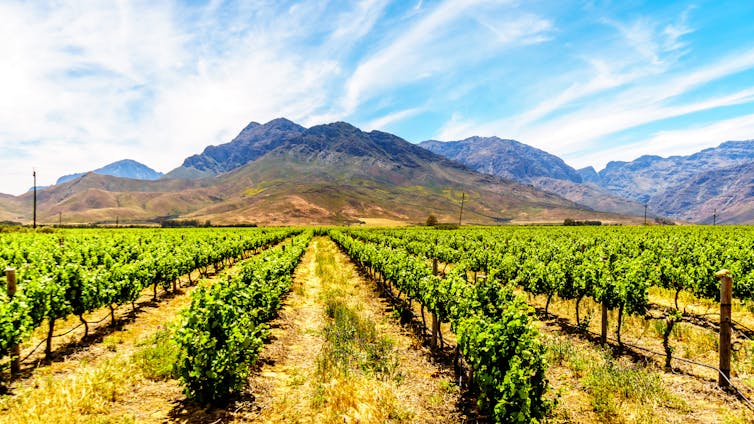
There’s an assumption in the agricultural industry that the yields and prices of crops will vary according to local conditions as well as supply and demand in local and international markets. As a result, farmers understand that not every year will be profitable but over the long run, all things being equal, the good years should outnumber the bad.
But is climate variability and risk changing?
The answer is yes. Scientific evidence which has become more robust over the past decade points increasingly to this reality.
So, what is changing and what can be done about it?
Climate risk and climate resilience both need to be considered. If climate risk is increasing, resilience must be built up through measured and effective responses.
The most important climate change risk is increased temperature. This affects rainfall and seasonal patterns on a global scale. It also affects plants’ phenological growth (phases in the plant’s development which require certain thresholds of sunlight, heat and moisture) and physical growth, as well as animal growth and exposure to pests and diseases. Ultimately it contributes directly to yield.
Read more: Explainer: why phenology is key in tracking climate change
Temperatures are increasing in southern Africa faster than the worldwide average. The region has seen rises of up to 1⁰C over the past 100 years. This doesn’t sound like much. But it’s averaged over an annual cycle and some individual stations have had daily temperatures increase by 3⁰C-4⁰C since records began in the mid 20th century.
Rainfall patterns are very hard to analyse, as the trends are rarely statistically significant. The average rainfall may not be changing. But there have been longer dry spells on top of which higher temperatures have led to increased evaporation. This has reduced the available water.
Future projections point to temperature increases of between 2⁰C and 5⁰C by 2100 (compared to pre-industrial temperatures). This depends on the future carbon emission pathway but we have seen no real reduction in the rate of increase in CO₂ emissions and thus expect the worst over the short to medium term.
Rainfall projections are loaded with uncertainty, but show broadly that the tropical and sub-tropical regions may experience more rainfall and Mediterranean regions may become drier.
The impact of climate change on agriculture is clear. The sector will suffer, which in turn will affect food supplies. The question is: what can be done about it? In my research I set out a number of proposals that would help farmers mitigate the risk. But these require concerted effort on the part of government, agri-business and financial institutions. These include a review of the existing cropping systems to assess their viability, adopting more sustainable methods (and perhaps crops), and intensive training in better techniques.
The impact
Crops are exposed to higher temperatures which many can endure. But it’s the increase in extremely hot days (and warm nights) that can cause the most damage.
The threat of changing rainfall seasons leading to shifting rainfall dates plays havoc with planting dates and crop management. Wide ranging crop yield reductions may not affect a country with access to grain imports, but many countries with a large subsistence agricultural base face severe food shortage when crops fail.
The most valued crops in South Africa are maize, which is exported, and wheat, which is not enough to provide the country’s needs. Fresh fruit and wine bring in the most foreign earnings. All of these are under threat from increased temperatures and changing rainfall patterns. Increased levels of CO₂ may favour a general level of crop growth, but yields are generally predicted to decrease under extreme climate conditions.
The World Food Programme’s 2016 report shows that crop production yield per hectare is, on average, increasing at a rate below that of global population growth. This implies that food production may not be able to meet global demand in the immediate future, leaving millions of people and numerous countries with reduced food security. To increase food production, yield per hectare must increase.
This means that agricultural productivity must increase, post-harvest losses must be decreased and adequate market access must be available for sellers and buyers alike.
The dual nature of agriculture
South Africa has a dual agriculture economy consisting of a well-developed commercial sector and smallholder, often subsistence, farming. Forty thousand commercial farms occupy approximately 87% of agricultural land. About two million smallholder or household farmers occupy the remaining 13%.
Common constraints to successful small-scale and emerging commercial agriculture include lack of access to finance, challenges regarding land governance in the communal areas, access to water, the need for effective extension services, and poor infrastructure, such as roads, electricity and access to markets.
To increase food production these challenges will need to be overcome and at the same time, new and existing climate risks must considered. These are my recommendations on what can be done to increase climate resilience in agriculture:
- Reassess marginal crops. If crops have been shown to be very drought sensitive and a combination of temperature increases and variable rainfall are an increased threat, then more appropriate crops should be considered.
- Select appropriate seed cultivars for the forecasted seasonal climate conditions. (Specific cultivars of a crop type are bred or designed for example for shorter or longer growing seasons, rainfall amounts and temperature.)
- Diversify, by growing a variety of crops or by pursuing other on-farm activities, such as agro-tourism or intensive high-value crops. This spreads risk and tests the potential of other activities and their income generation.
- Use conservation agriculture techniques such as minimal or no-till methods, intercropping (mixing crop types in one field) and cover cropping (introducing alternative crops in successive years on the same field). These techniques conserve soil moisture, encourage soil health and reduce dependence on fertiliser and herbicides.
- Focus on reducing post-harvest losses through heat as well as excessive or unseasonal rainfall.
- Use an ecologically beneficial combination of crops and livestock to restore soil productivity and balance income and expenditure, especially during times of drought, in a financially sound way.
- Access and learn about climate information so that seasonal climate forecasts can be used and applied.
- Liaise with other farmers, academics and agricultural organisations to keep abreast of the latest developments.

Peter Johnston, Climate Scientist & Researcher, University of Cape Town
This article is republished from The Conversation under a Creative Commons license. Read the original article.
Tuesday, December 10, 2019
Friday, December 6, 2019
Thursday, December 5, 2019
Middle Earth: the fight to save the Amazon's soul
Subscribe to:
Posts (Atom)